
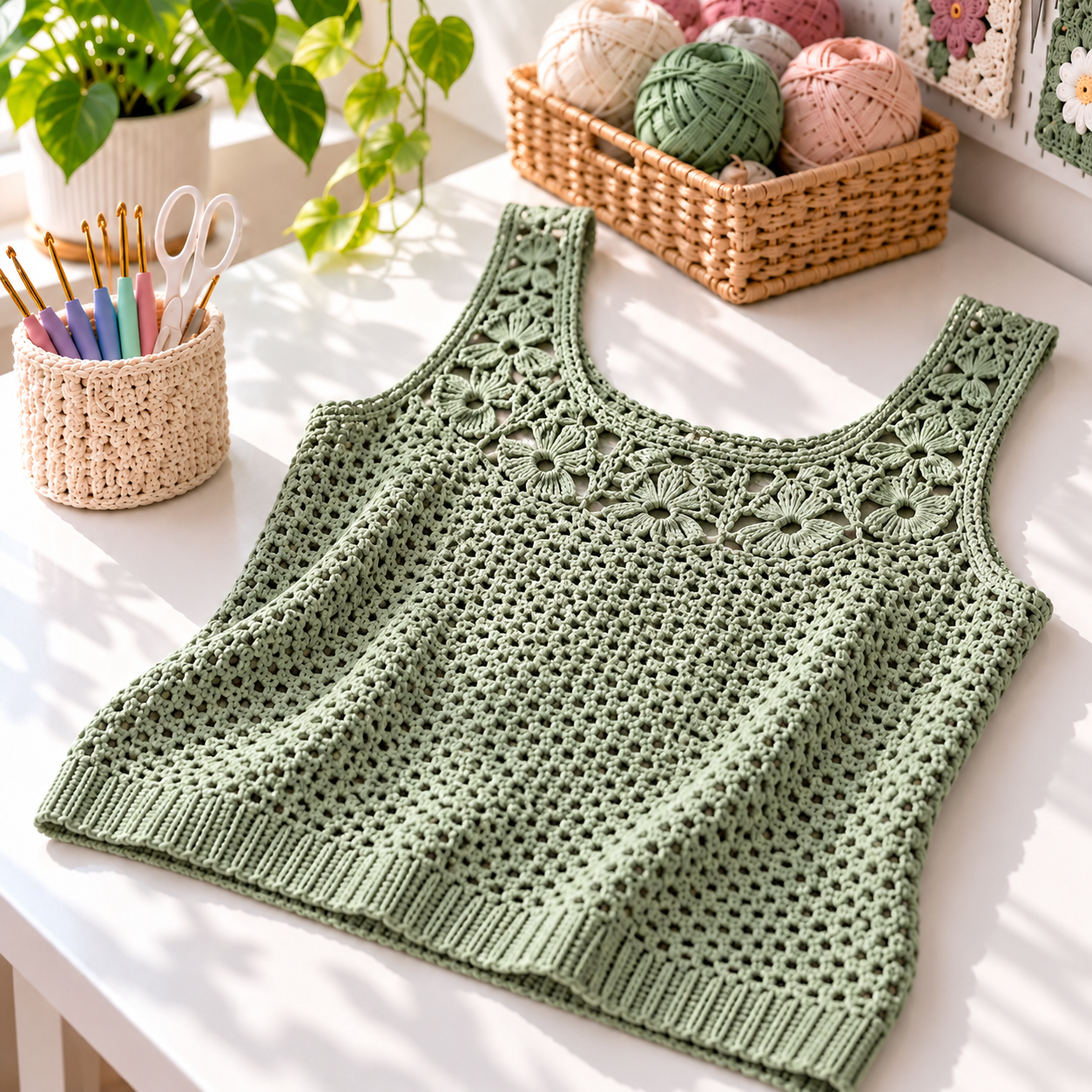
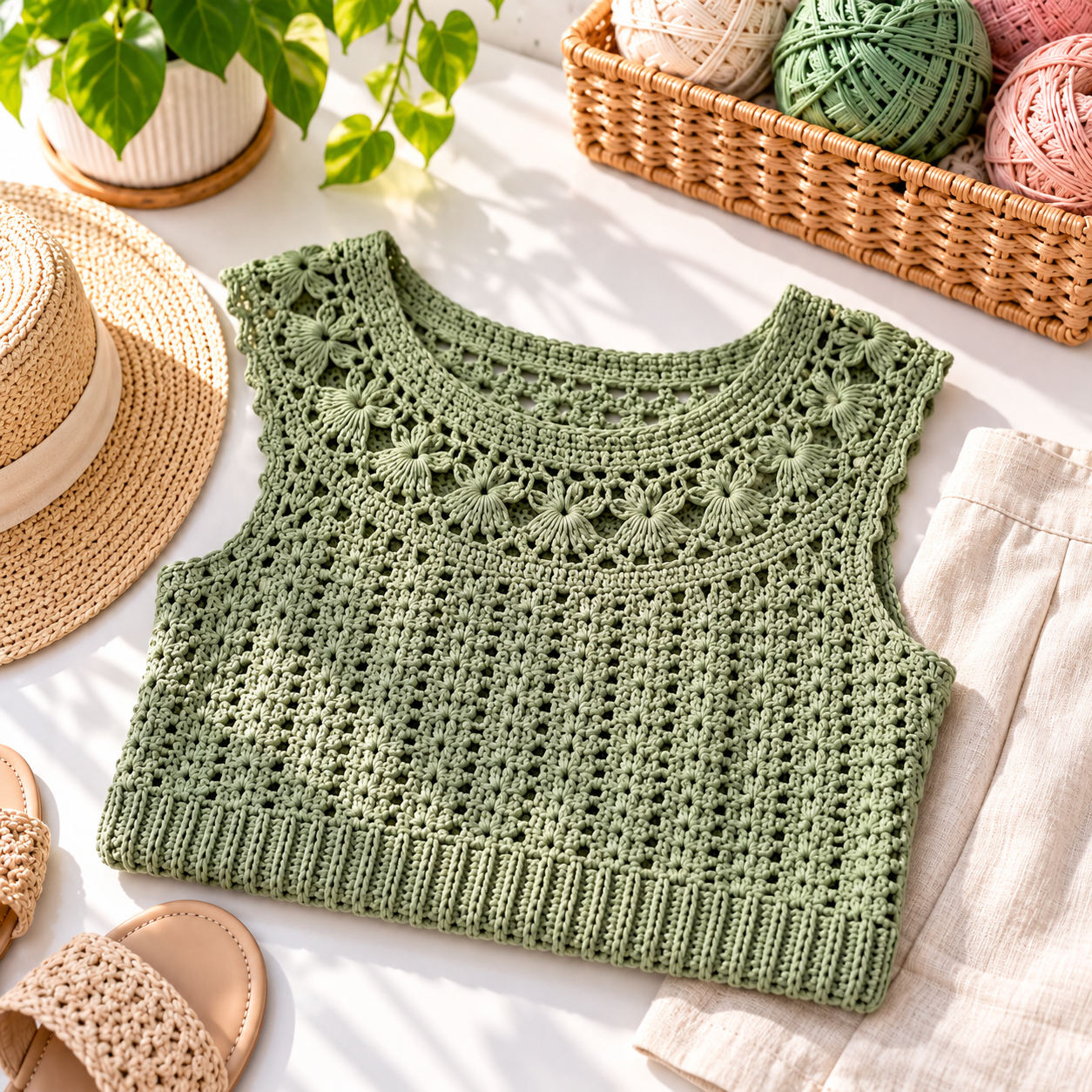
Chantilly Crochet is a light, feminine approach to summer garment making: breathable yarn, a relaxed sleeveless shape, and a decorative lace section that turns simple fabric into something polished. This made-to-measure summer top uses a ribbed lower edge, an airy mesh body, and an open fan-stitch yoke. It is designed as two panels, so you can adjust the fit with your own measurements instead of relying on one fixed size.
The result is a comfortable Sleeveless Crochet Summer Top that works with linen trousers, skirts, or denim. Wear it alone on warm days or layer it under a cardigan in spring.
Project Overview
- Skill level: Confident beginner to intermediate
- Construction: Two bottom-up panels, seamed at shoulders and sides
- Fit: Straight, easy fit with 2–4 inches (5–10 cm) of positive ease
- Yarn: Sport weight (#2) cotton, bamboo, linen, or a blend
- Hook: 4 mm, adjusted as needed for gauge and drape
Materials
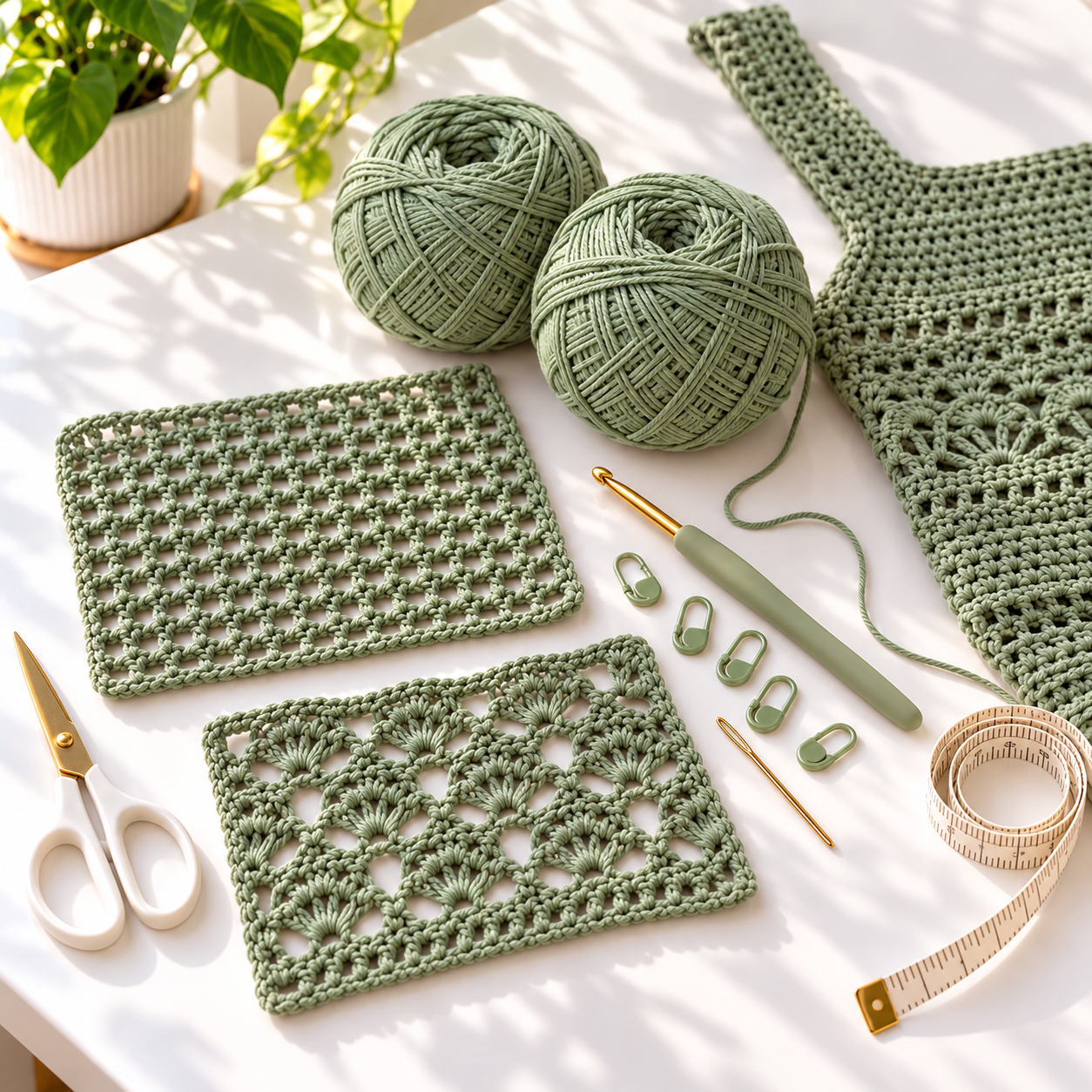
- Sport-weight cotton-bamboo yarn: approximately 750–1,650 yards, depending on size and length
- 4 mm crochet hook
- Locking stitch markers
- Tape measure
- Tapestry needle and scissors
- Blocking mats and rustproof pins
A Bamboo Yarn Crochet Top has fluid drape and a cool hand, while cotton adds structure and stitch definition. Linen becomes softer with wear and is excellent for warm weather. Choose a smooth yarn so the lace remains visible. Although “One Skein Crochet Top” is a popular search, most adult tops require several standard skeins; always buy according to total yardage and keep an extra skein for swatching and adjustments.
Abbreviations
- ch: chain
- sc: single crochet
- hdc: half double crochet
- dc: double crochet
- BLO: back loop only
- sp: space
- st(s): stitch(es)
- rep: repeat
Make a Gauge Swatch
Make a generous swatch with your chosen yarn. Work at least 6 inches (15 cm) in the mesh stitch, then add several rows of the lace pattern. Wash and dry it exactly as you plan to care for the finished top. Measure only after the swatch is fully dry.
A useful starting gauge is 20 mesh stitches and 20 rows per 4 inches (10 cm), but your measured gauge is the one that matters. If the fabric feels stiff, use a larger hook. If it looks loose or unstable, try a smaller hook.
Calculate Your Panel Width
Measure the fullest part of the bust. Add 2–4 inches (5–10 cm) for ease, then divide by two. That number is the finished width of each panel. Multiply it by your stitches-per-inch gauge and round to a number that works with the mesh repeat.
Example: for a 38-inch bust plus 4 inches of ease, the garment circumference is 42 inches. Each panel should measure 21 inches wide. At 5 stitches per inch, begin the body with approximately 105 stitches. Make a short test row and check the actual width before continuing.
Bottom Ribbing
Ch 7.
Row 1: Hdc in the second ch from the hook and across. Turn. (6 hdc)
Row 2: Ch 1, BLO hdc across. Turn.
Repeat Row 2 until the relaxed ribbing reaches your calculated panel width. Do not stretch it while measuring. Turn the ribbing so you can work evenly along its long edge.
Mesh Body
Set-up row: Ch 1 and work sc evenly across the long edge of the ribbing until you reach your calculated stitch count. Turn.
Mesh row: Ch 1, sc in the first st, *ch 1, skip the next st, sc in the next st; rep from * across. Turn.
Repeat the mesh row until the panel reaches about 2½–3 inches (6–7.5 cm) below the underarm. Keep a note of the row count because the second panel must match.
Shape the Armholes
Mark the desired armhole depth on both edges. For the first shaping row, leave approximately 1–2 inches (2.5–5 cm) unworked at each side, depending on your size and preferred coverage. On the next two to four rows, decrease one mesh repeat at each edge. Continue straight until the solid-and-mesh section reaches the base of the lace yoke.
Try the panel against your body as you work. A Feminine Sleeveless Crochet Top for Spring should cover the bra line comfortably without pulling under the arms.

Open Fan Lace Yoke
The lace repeat uses a multiple of 6 stitches plus 1. Adjust the final mesh row by adding or omitting one stitch if necessary.
Lace Row 1: Ch 3, dc in the first st, *skip 2 sts, 5 dc in the next st, skip 2 sts, dc in the next st; rep from * across. Turn.
Lace Row 2: Ch 3, dc in the first st, *ch 3, sc in the center dc of the next 5-dc fan, ch 3, dc in the next dc; rep from * across. Turn.
Lace Row 3: Ch 3, dc in the first st, *5 dc in the next sc, dc in the next dc; rep from * across. Turn.
Repeat Lace Rows 2–3 until the yoke reaches the base of the neckline. This alternating fan pattern creates the delicate look associated with Free Lacy Crochet Patterns without requiring complicated motifs.
Neckline and Shoulders
Lay the panel flat and mark the center neckline. Leave roughly one-third of the panel width for the neck and divide the remaining stitches equally between the shoulders. Work each shoulder separately in the established lace pattern until the panel reaches your desired total length.
For the back, repeat the same ribbing, mesh body, and armhole shaping. You can continue the lace almost to the top for a shallow back neck, or stop the lace lower and finish with short mesh shoulders. Confirm that the front and back shoulder widths match.
Seaming and Edging
- Block both panels to the same measurements before joining.
- Place right sides together and whipstitch the shoulder seams.
- Seam each side from the hem upward, stopping at the armhole marker.
- Join yarn at the underarm and work one round of sc evenly around the opening.
- Repeat around the neckline, using decreases at tight curves if the edge flares.
Keep edging stitches relaxed. A tight border can make the neckline pucker and reduce comfort at the armholes.
Fit and Customization Tips
- Longer top: Add mesh rows before armhole shaping.
- Cropped version: Shorten the mesh body while preserving the yoke depth.
- More coverage: Begin the lace higher and use fewer lace rows.
- Deeper neckline: Divide for the shoulders earlier.
- Chic trim: Add a tiny picot edge for a Chic Summer Crochet Top With Crochet Trim.
For a Top Down Crochet Summer Top, the same style can be adapted by starting with the neckline and increasing through the lace yoke, but the two-panel method is easier to measure and keeps the stitch pattern symmetrical.
Yarn Care and Styling
Hand wash or use the gentle cycle recommended on the yarn label. Support the wet garment rather than lifting it by the straps, then reshape it flat to dry. Bamboo and cotton blends may grow after washing, which is why a blocked swatch is essential.
Pair the finished top with high-waisted shorts for a casual look or a flowing skirt for dinner outdoors. Sage, ivory, dusty rose, and pale blue all emphasize the lace. A mercerized cotton version offers shine and crisp definition for crocheters searching for a Crochet Mercerized Cotton Free Pattern.
Your Chantilly Crochet Summer Top
This adaptable pattern combines wearable proportions with three approachable textures: ribbing, mesh, and fan lace. Measure carefully, match the second panel to the first, and block before seaming for the cleanest finish. The result is a breathable handmade top that feels elegant without being overly formal—exactly what a summer crochet wardrobe needs.