
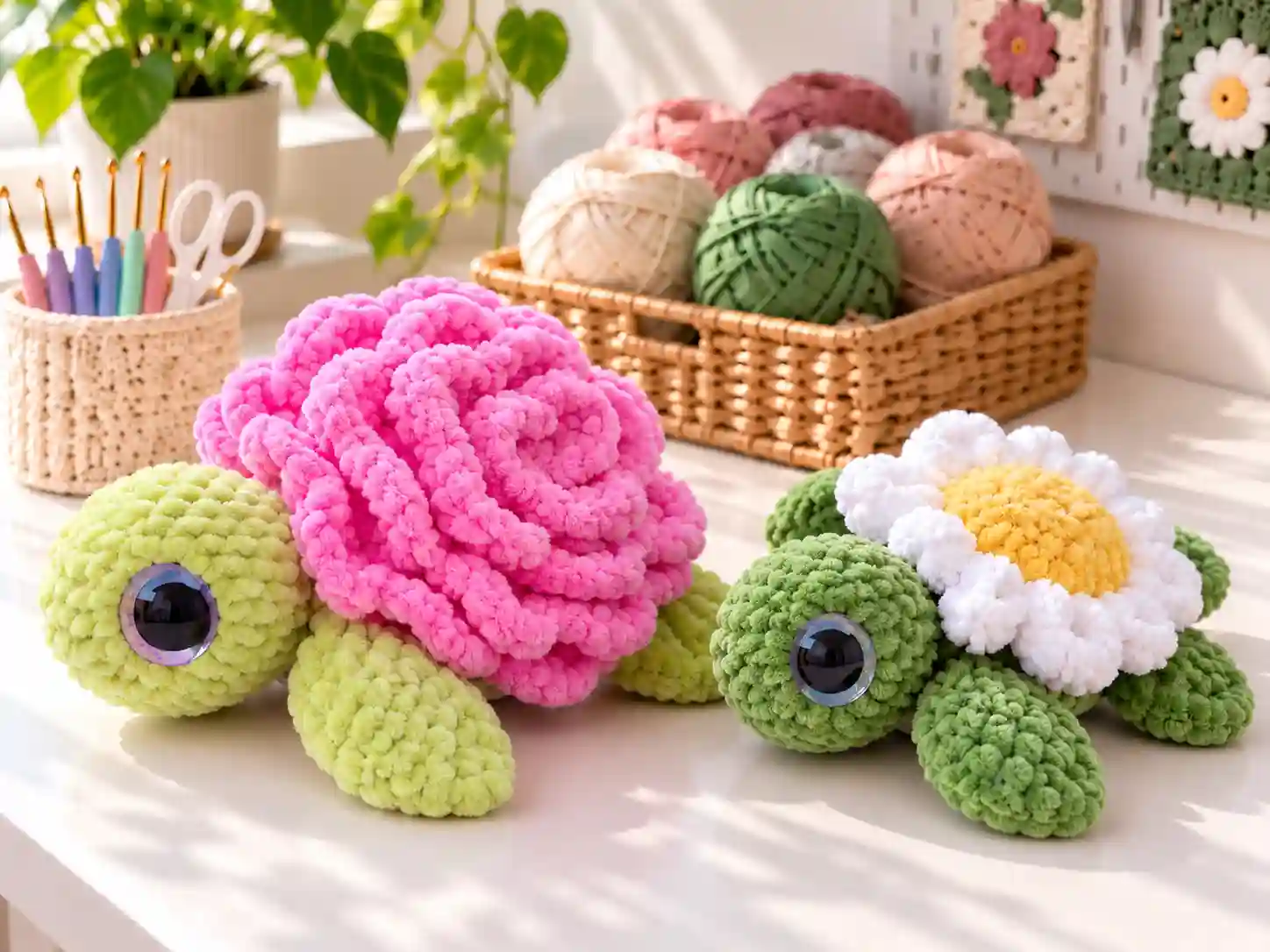
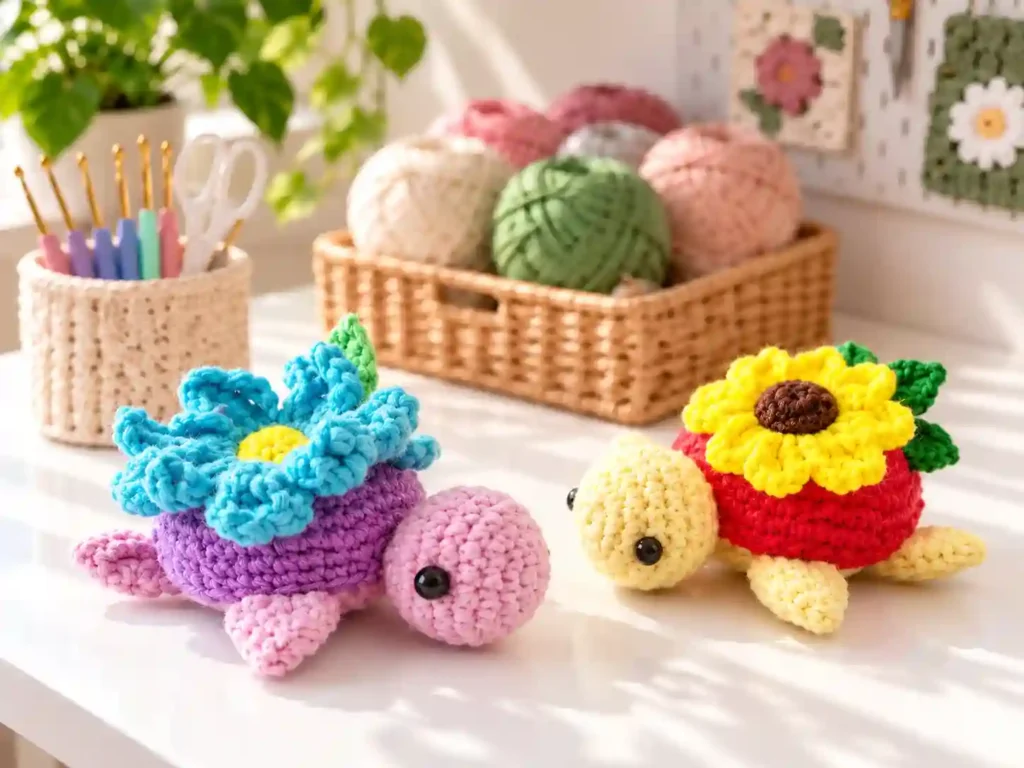
A flower turtle amigurumi is one of those crochet projects that looks fancier than it is. The turtle body stays simple and rounded, while the shell becomes the star: a rose, daisy, or layered flower made from repeating petals. These 8 Flower Turtle Amigurumi Crochet Patterns are ideal for gifts, desk decor, nursery shelves, and small-batch craft fair stock.
The appeal is easy to understand. A crochet flower plush combines the friendly shape of a stuffed animal with the soft, decorative look of a handmade flower. You can keep the palette classic with green and pink, or switch the shell to sunflower yellow, lavender, white, or deep red for a completely different mood.
Why You’ll Love These Flower Turtle Designs
- They make charming handmade gifts for birthdays, baby showers, Mother’s Day, and Valentine’s Day.
- The flower shell offers plenty of room for color play without changing the basic turtle construction.
- Small amigurumi projects are portable, so they work well for crocheting during short breaks or while traveling.
- A rose turtle crochet pattern free design can be a lovely way to use up cotton or acrylic yarn from your stash.
- Finished turtles look sweet on bookshelves, nursery shelves, plant stands, and gift baskets.
Finished Size
Finished measurements vary widely among flower turtle designs because some are made as compact keychain-size plushies while others are larger shelf decorations. The exact size depends on the pattern, yarn weight, hook size, and how firmly you stuff the turtle. Always check the individual designer’s finished measurement before choosing yarn.
Materials You’ll Need
Most flower turtle amigurumi projects use the same small set of supplies. Gather everything before you begin so you can work through the body, shell, and assembly without interruptions.
- Worsted-weight or DK-weight yarn in green for the body, head, legs, and tail
- Contrasting yarn for the flower shell, such as pink, red, cream, yellow, lavender, or blue
- A crochet hook suited to your chosen yarn
- Polyester fiberfill stuffing
- Yarn needle or tapestry needle
- Scissors
- Stitch markers
- Safety eyes or black embroidery floss, depending on the pattern and intended recipient
Yarn Information
Cotton yarn is a popular choice for crochet flower plush projects because it gives crisp stitch definition, especially around petals. Acrylic works well too and often produces a slightly softer, squishier plush. For a rose turtle, a smooth non-textured yarn helps the spiral petals stay defined.
If you change yarn weight, expect the finished turtle to change size. A lighter yarn with a smaller hook creates a daintier flower turtle, while bulky yarn makes a chunkier, more huggable plush. Keep your tension consistent so the petals and body remain evenly shaped.
Crochet Hook
Use the hook size recommended by the specific pattern you choose. For amigurumi, many crocheters prefer a hook slightly smaller than the yarn label suggests because a tighter fabric helps prevent stuffing from showing through. If you tend to crochet loosely, going down a hook size can improve the finished shape.
Crochet Abbreviations
The abbreviations below are commonly used in US crochet terminology. Always confirm the terminology used by the designer before starting, since UK and US stitch names differ.
- ch = chain
- sc = single crochet
- hdc = half double crochet
- dc = double crochet
- sl st = slip stitch
- st(s) = stitch(es)
- inc = increase
- dec = decrease
- rnd = round
- FO = fasten off
Pattern Notes
Flower turtle amigurumi is usually worked in continuous rounds rather than turned rows. A stitch marker is especially helpful for marking the first stitch of each round, since it is easy to lose your place while shaping a small head or shell.
For the flower shell, petal sections are often built by working several stitches into the same space or by repeating a petal sequence around a center circle. Keep the petal count consistent from one repeat to the next. If one petal looks wider than the others, check whether you accidentally added or skipped a stitch in that section.
When changing colors, finish the last stitch of the old color until only two loops remain on the hook, then draw through the new color. This creates a cleaner transition at the edge of a petal or around the shell center.
8 Flower Turtle Amigurumi Crochet Patterns to Try
These design ideas show how flexible the flower turtle concept can be. Each one keeps the same sweet turtle base but changes the shell treatment, petal style, or color story.
1. Classic Rose Turtle
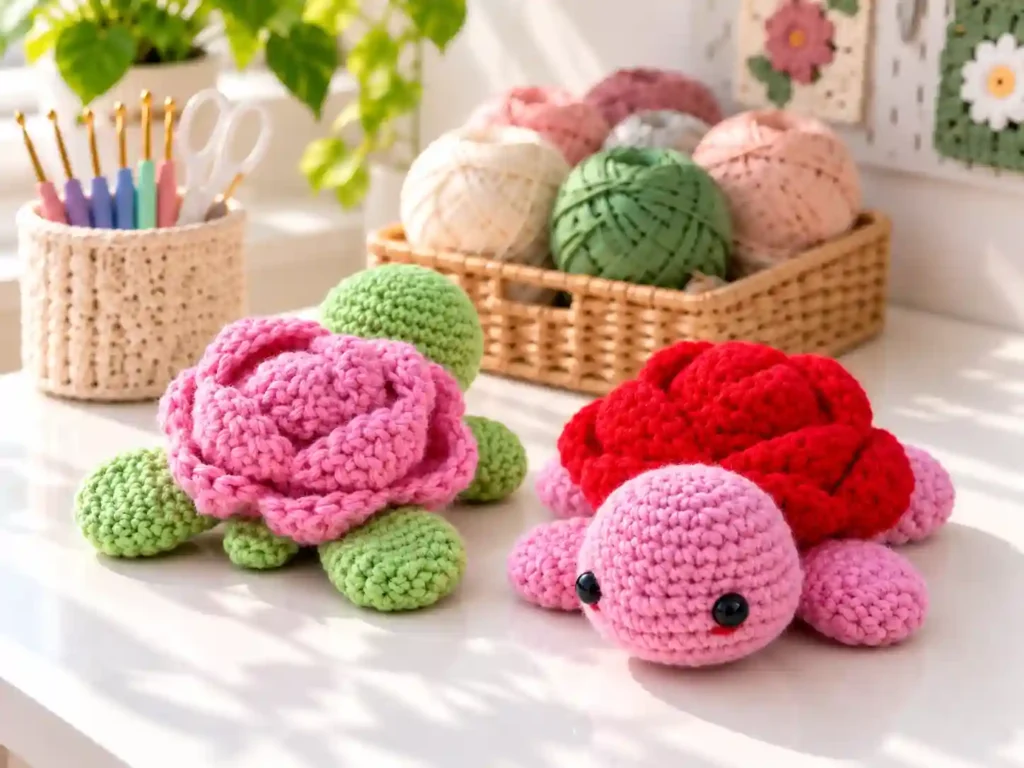
A rose turtle uses layered petals that spiral outward from the center of the shell. Pink and red are the most traditional choices, but blush, burgundy, coral, and cream all create beautiful results. This style is especially lovely for Valentine’s-themed gifts.
2. Daisy Flower Turtle
For a daisy-inspired version, use white or pale yellow petals around a bright yellow center. The contrast between the green turtle body and the crisp white flower shell gives the plush a fresh, springlike look.
3. Sunflower Turtle
A sunflower turtle pairs golden-yellow petals with a brown or deep amber center. This is a cheerful option for autumn decor, kitchen shelves, or a gift for someone who loves warm, earthy colors.
4. Lavender Bloom Turtle
Soft purple petals with a cream or pale green center create a gentle, calming palette. Lavender works particularly well with sage green or muted olive yarn for the turtle body.
5. Mini Keychain Turtle
Use lightweight yarn and a smaller hook to make a pocket-size flower turtle. Add a sturdy keychain ring or lobster clasp to the top of the shell after assembly. These make quick, useful gifts and sell well at craft markets.
6. Pastel Baby Turtle
For a nursery-friendly version, choose pastel pink, mint, butter yellow, or baby blue for the shell. If the plush will be given to a young child, embroidered features are generally safer than small attached parts.
7. Rainbow Petal Turtle
Instead of one shell color, work the petals in a repeating sequence of two, three, or more colors. A rainbow flower shell turns a simple turtle into a playful statement piece without requiring complicated construction.
8. Vintage Rose Turtle
Dusty rose, mauve, antique cream, and muted green create a vintage-inspired flower turtle. This palette looks beautiful in cotton yarn and suits cottage-style home decor.
Assembly
Assembly is where a flower turtle really comes together. Work slowly and check the placement before sewing anything permanently in place.
- Stuff the turtle body firmly enough to hold its rounded shape, but not so tightly that the stuffing pushes through the stitches.
- Position the flower shell over the back of the body and adjust it until it sits centered and balanced.
- Use matching yarn and a tapestry needle to sew the shell securely to the body, working through several stitches around the edge.
- Attach the head, legs, and tail according to your chosen pattern, keeping the placement symmetrical.
- Add safety eyes or embroider the face, then weave in all remaining yarn ends.
Finishing Touches
After assembly, gently shape the petals with your fingers. If a petal edge curls too much, smooth it outward and let the yarn relax. Avoid pressing synthetic yarn with high heat, since it can distort the fibers.
For a polished finish, trim any stray fibers carefully with small scissors. A final pass with a yarn needle to hide loose ends inside the body will make the plush look tidier and help it hold up to handling.
Crochet Tips
- Use a stitch marker at the beginning of every round, especially when working small amigurumi pieces.
- Keep stuffing gradual: add a little at a time and test the shape before closing the opening.
- For flower petals, consistent tension matters more than speed. Uneven tension can make one petal look larger than the rest.
- Choose a smooth yarn for detailed petals; fuzzy or heavily textured yarn can hide stitch definition.
- If your shell looks flat, check that each petal repeat has the correct number of stitches before moving on.
Variations
A crochet flower turtle is easy to personalize. Try a two-tone shell with a contrasting flower center, or make the turtle body in gray, brown, or blue instead of green. Seasonal palettes also work well: red and white for winter, pastel shades for spring, warm oranges for autumn, and bright tropical colors for summer.
You can also adapt the finished plush into a hanging ornament, bag charm, or small desk companion. Just make sure any added hardware is attached securely and is appropriate for the person who will use it.
Common Problems and Troubleshooting
Problem: The flower shell looks uneven. Count the stitches in each petal repeat. One extra or missing stitch can change the shape of an entire section. Mark the start of each repeat if needed.
Problem: The turtle body is too floppy. This usually means it needs more stuffing or a tighter fabric. Add stuffing gradually and consider using a smaller hook for a denser amigurumi fabric.
Problem: The shell will not sit flat against the body. Reposition it before sewing. A shell that is slightly too far forward or backward can make the turtle look unbalanced. Pin it in place with stitch markers, check it from several angles, then sew.
How to Use the Finished Crochet Project
- Display it on a shelf, desk, or nursery dresser.
- Add it to a gift basket with flowers, tea, or handmade cards.
- Turn a mini version into a keychain or bag charm.
- Use seasonal colors for holiday decor.
- Make a matching set in different flower colors for a baby nursery or craft fair table.
Care Instructions
Spot cleaning is usually the safest option for a stuffed flower turtle. Use a damp cloth with a small amount of mild soap, then blot gently and allow it to air dry. Avoid wringing or twisting the plush, which can distort the stuffing and petals.
If washing is necessary, place the turtle in a mesh laundry bag and use a gentle cycle with cold water. Reshape it while damp and let it dry completely before storing it.
Frequently Asked Questions
Can a beginner make a flower turtle amigurumi?
Yes. Many designs use basic amigurumi skills such as single crochet, increases, decreases, and sewing pieces together. The flower shell may require more attention to stitch counts, but it is a good project for building confidence.
What yarn works best for a crochet flower plush?
Smooth cotton or acrylic yarn is a dependable choice. Cotton shows stitch definition clearly, while acrylic creates a soft, lightweight plush. Avoid very fuzzy yarn if you want the petals to stand out.
Can I use a different hook size?
Yes, but it will affect the size and density of the finished turtle. A smaller hook creates tighter stitches and a firmer plush; a larger hook makes a bigger, looser project.
How do I make a rose turtle look more realistic?
Use two or three close shades of pink or red for the petals, and keep the petal repeats even. A slightly darker center can also add depth to the rose shape.
Can I make the flower turtle larger or smaller?
Yes. Change the yarn weight and hook size together, or follow the designer’s guidance for scaling the pattern. Keep the proportions between the body and shell balanced so the turtle remains stable.
How do I stop amigurumi stuffing from showing through?
Use a smaller hook, maintain even tension, and stuff firmly but gradually. If the fabric still looks open, switch to a smoother yarn or add an extra layer of stuffing only after checking the stitch tightness.
How should I wash a finished flower turtle?
Spot clean whenever possible. For a deeper clean, hand wash gently or use a mesh bag on a delicate cold-water cycle, then air dry and reshape the petals.
Conclusion
These 8 Flower Turtle Amigurumi Crochet Patterns prove how much personality you can create with a simple turtle shape and a flower-shell design. Pick a rose turtle for a romantic gift, a daisy version for spring, or a rainbow petal turtle for something playful. Once you make one, it is hard not to start planning the next color combination.