
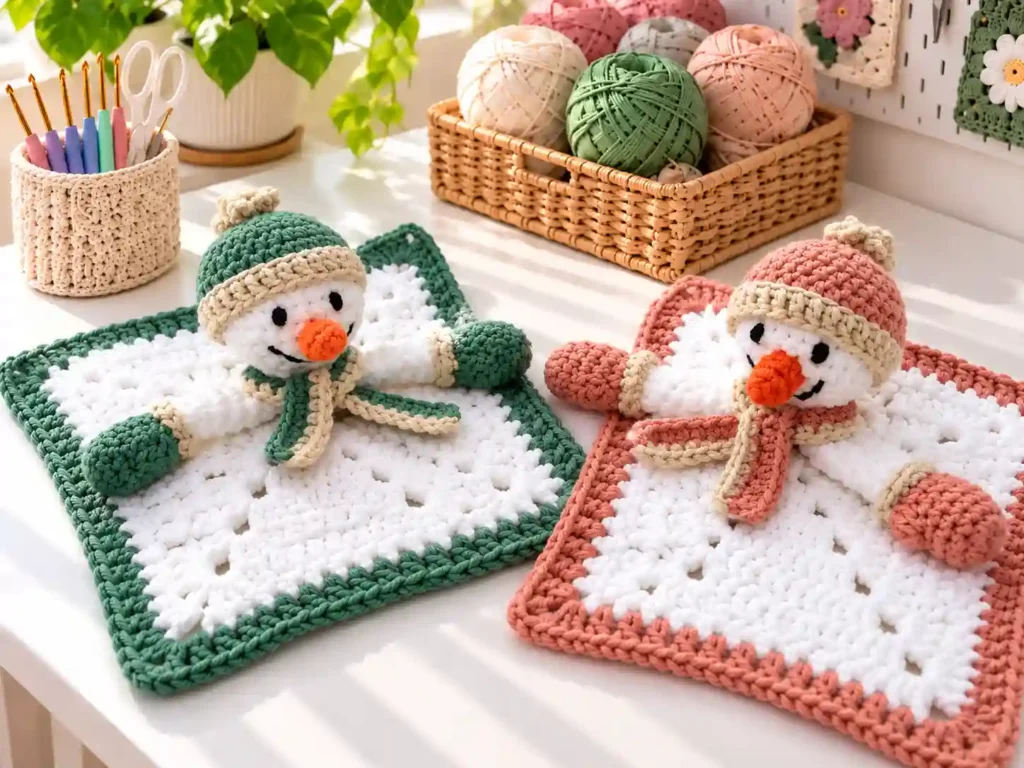
A crochet lovey combines two baby favorites in one thoughtful gift: a small security blanket and a cuddly animal friend. These Cute Baby Lovey Free Patterns are ideal for baby showers, newborn photographs, nursery gifts, and quiet bedtime routines.
The basic idea is simple. A soft blanket forms the body, while a crocheted animal, character, or playful motif sits in the center. You can choose calming neutrals for a modern nursery, cheerful colors for a child’s room, or soft pastels for a traditional baby gift. Since the blanket is compact, a lovey also makes a portable Crochet Baby Snuggle for stroller rides and visits.
Why You’ll Love These Baby Loveys
- The blanket-and-toy design creates a useful handmade gift.
- Animal details make each project personal and memorable.
- Small blanket sections are easier to manage than a full-size afghan.
- Color changes let you coordinate the lovey with any nursery.
- Many designs can use leftover soft yarn from other baby projects.
- The finished piece is easy to fold into a gift basket or diaper bag.
Choosing a Baby Lovey Pattern
Start with the type of friend you want to make. A bunny works beautifully for spring gifts, while a bear creates a classic woodland look. Cat Lovey Crochet Pattern ideas suit animal-loving families, and a simple star, flower, or sleepy owl can create a more decorative design.
Pay close attention to the construction before beginning. Some loveys use a square blanket, while others have a circular, starburst, or hexagonal center. The animal may be crocheted separately and sewn on, or it may be worked directly into the middle. A separate head is often easier to position securely and replace if you need to adjust the placement.
Materials You’ll Need
- Soft baby-safe yarn in the colors required by your chosen pattern.
- The crochet hook specified by the individual pattern.
- Tapestry needle for sewing and weaving in ends.
- Scissors.
- Stitch markers if the blanket or animal is worked in rounds.
- Polyester fiberfill if the animal head requires stuffing.
- Embroidered yarn for facial details.
Yarn Information
Use a smooth, washable yarn designed for baby items whenever possible. Acrylic, cotton, bamboo blends, and soft washable wool blends can all work, but the yarn should feel gentle against delicate skin and should not shed easily.
Follow the selected pattern for yarn weight and quantity. Do not assume that every lovey uses the same amount. Changing from light yarn to bulky yarn will alter the finished size, drape, and appearance, even if you keep the same stitch sequence.
Crochet Hook
Use the hook size listed in the individual pattern. If you crochet tightly, your blanket may become stiff and smaller than expected. If your tension is loose, the fabric may have large openings or the animal head may lose its shape.
Crochet Abbreviations
Most baby lovey designs use US crochet terminology. Common abbreviations may include:
- ch: chain
- sc: single crochet
- hdc: half double crochet
- dc: double crochet
- sl st: slip stitch
- st or sts: stitch or stitches
- inc: increase
- dec: decrease
Only use the abbreviations that appear in the specific pattern you are following. Always check the designer’s terminology because UK and US stitch names are different.
Pattern Notes Before You Begin
These pattern ideas are a collection of project directions rather than one universal stitch pattern. Each design may use a different blanket shape, animal, yarn weight, hook, and construction method. Confirm the original designer’s instructions for exact stitch counts, rounds, measurements, gauge, and yarn quantities before crocheting.
In general, the blanket is worked from the center outward or from one edge across. The animal head is commonly made separately in rounds, lightly stuffed, embroidered, and attached to the blanket. Keep the right and wrong sides clearly identified, especially when shaping ears, muzzles, or facial features.
Popular Cute Baby Lovey Free Patterns
Bunny Blanket Lovey
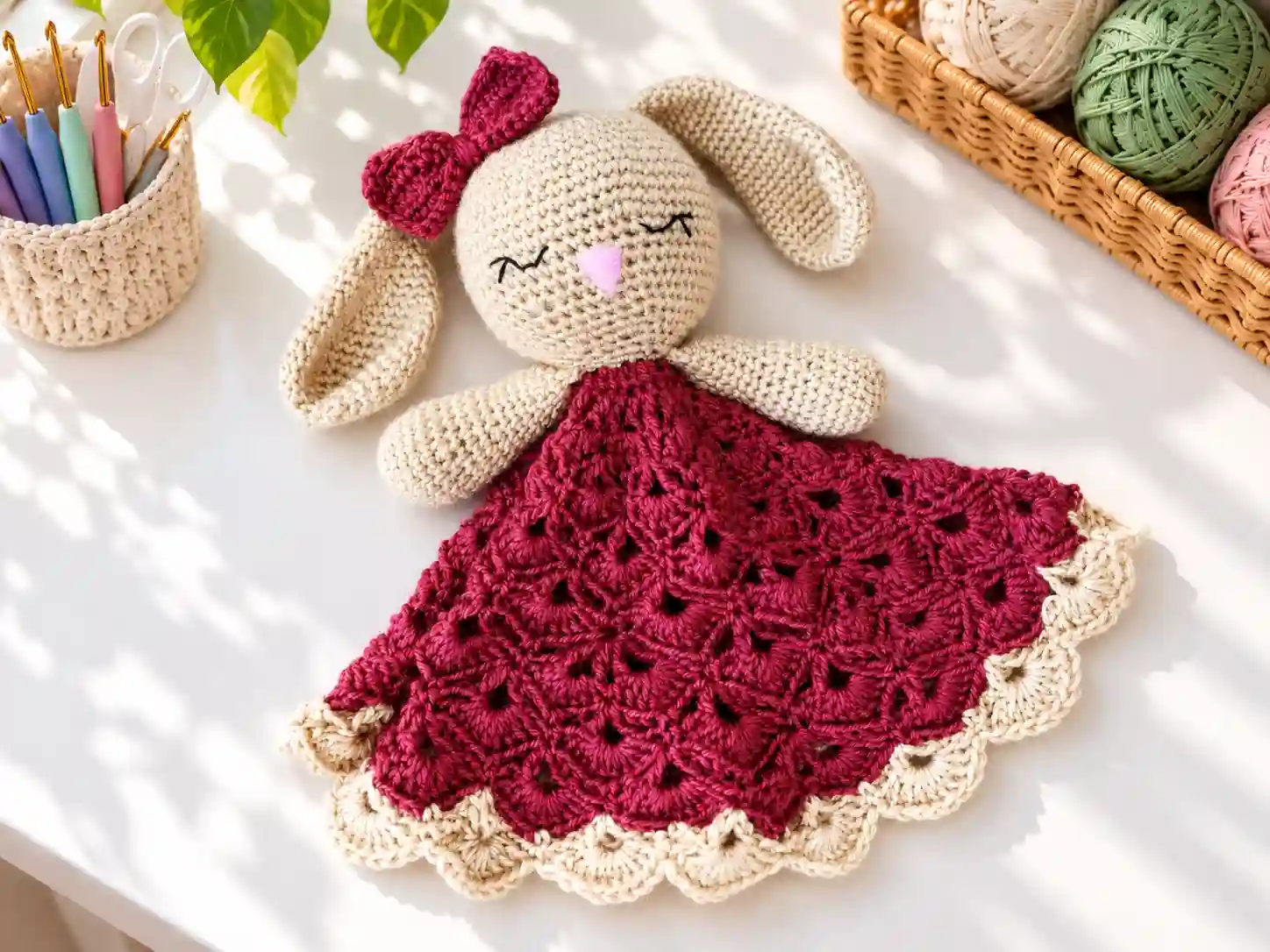
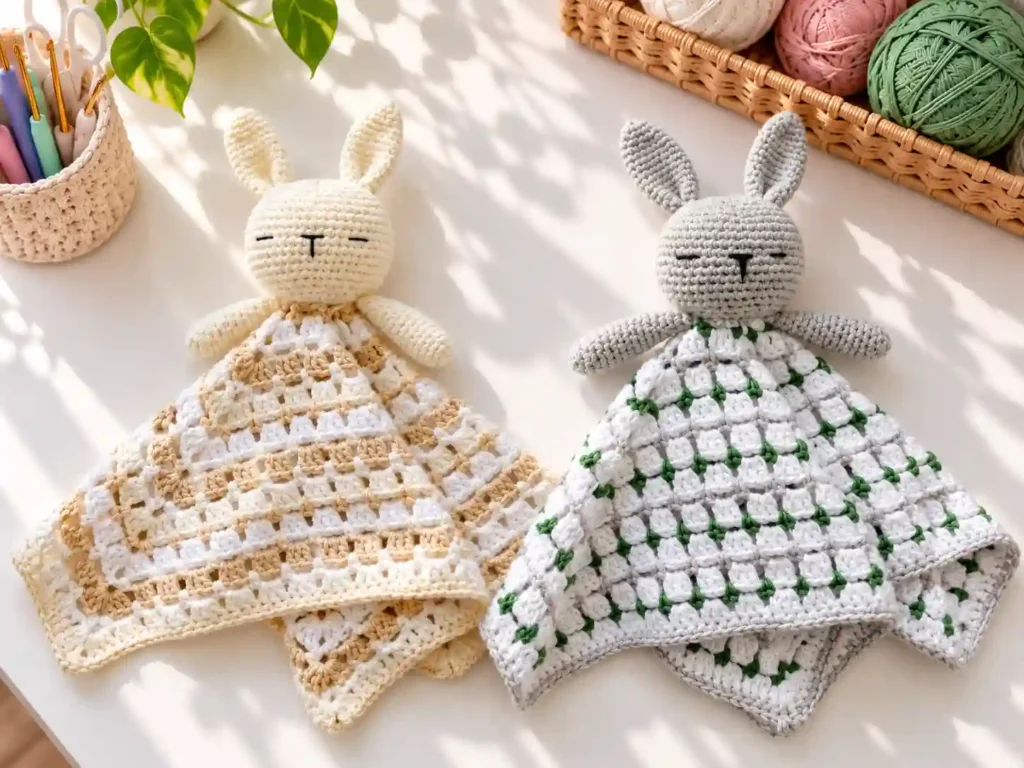
A bunny lovey has an especially gentle appearance, thanks to its long ears and soft rounded features. Choose white, cream, blush, or natural gray for a traditional look. A small embroidered nose and closed eyes keep the design sweet while avoiding hard embellishments.
For a Crochet Patterns Free Bunny project, look for a design with a securely attached head and ears that are firmly sewn into place. The blanket can remain simple so that the bunny becomes the visual focus.
Bear Lovey
A bear design gives the finished piece a timeless woodland character. Brown, oatmeal, rust, and sage are easy to combine, but a bear can also look charming in lavender or pale blue. Small rounded ears and an embroidered muzzle are enough to establish the shape.
This style works well for a baby shower because it suits many nursery themes. A textured border around the blanket can add interest without making the center too busy.
Cat Lovey
A cat-themed lovey is a playful choice for families who enjoy feline designs. Use a contrasting shade for the inner ears, then add embroidered whiskers and sleepy eyes. Keep the face soft and flat so the lovey remains comfortable to hold.
A striped blanket can suggest a favorite cat’s coloring, while a solid blanket creates a cleaner modern finish. Work color changes carefully and weave in each end securely.
Owl or Woodland Lovey
An owl lovey can combine a round blanket with a central bird face, embroidered eyes, and small wings. Woodland colors such as cream, olive, mustard, and warm brown create a cozy autumn palette.
This is also a good place to use gentle surface details. A few carefully placed stitches can suggest feathers without adding loose pieces that might detach.
Simple Star or Flower Lovey
Not every lovey needs an animal. A star, flower, moon, or sun motif offers a quieter design for a minimalist nursery. These versions may be easier to coordinate with existing blankets and can suit older babies who enjoy a familiar comfort object.
Assembly and Finishing
- Complete the blanket and animal components according to the selected pattern.
- Block or gently shape the blanket if the pattern recommends it.
- Position the animal head at the center or specified attachment point.
- Pin the piece in place and check that it sits evenly from every direction.
- Sew around the base with strong, matching yarn, making several secure passes.
- Attach ears, wings, tails, or other details firmly before weaving in the ends.
- Embroider the face if the design uses stitched features.
- Trim excess yarn and inspect every seam before washing or gifting.
If the animal head is stuffed, use only enough fiberfill to give it gentle shape. Overstuffing can make the center rigid and may pull the blanket out of alignment. For baby items, embroidered details are generally preferable to loose buttons, beads, or plastic pieces.
Helpful Crochet Tips
- Count regularly when working the blanket so the shape stays balanced.
- Use stitch markers at the beginning of rounds if the pattern is worked continuously.
- Keep facial features symmetrical by marking placement before sewing.
- Test the blanket fabric in your hands before attaching the animal head.
- Choose a washable yarn so the lovey can be cleaned after regular use.
- Secure every tail on the back of the work, especially near the blanket edge.
Easy Variations
Change the mood of the lovey with color rather than changing the construction. A cream blanket with muted sage details feels calm, while coral, yellow, and turquoise create a brighter nursery accent. You can also make matching ears, paws, or blanket borders in a second shade.
For a larger or smaller result, follow a pattern specifically written for the size you want. Changing yarn weight and hook size may alter the dimensions, but it can also change the fabric density and animal proportions. Test a small section first instead of modifying the entire project blindly.
Common Problems and Solutions
The blanket is curling
Curling may come from tight tension, skipped increases, or an uneven edge. Check the stitch count and compare the shape with the pattern instructions. Light blocking can help, but blocking will not correct missing stitches or an incorrect increase sequence.
The animal does not sit flat
Check that the head is centered and that the stuffing is distributed evenly. Remove a little filling if the piece is too firm, then pin it again before sewing. Attach it with small, even stitches around the complete base.
The blanket looks uneven
Uneven tension often becomes more noticeable as the blanket grows. Try holding the yarn consistently and pausing after each round to smooth the fabric. If the problem is caused by a wrong stitch count, carefully unravel to the last correct round rather than forcing the next section to fit.
How to Use the Finished Lovey
A finished lovey makes a thoughtful baby shower or newborn gift. It can rest in a nursery basket, accompany a child in a stroller, or become part of a carefully assembled gift set with bibs, socks, and a soft book. Some families also keep a second lovey in reserve for washing days.
These projects can also become meaningful crochet crafts for kids when older children help choose the colors, sort yarn, or add a paper gift tag. Adult supervision is important, and small crochet pieces should not be left with a baby unless they are securely attached and suitable for the child’s age.
Care Instructions
Follow the washing instructions for the yarn used. In many cases, gentle machine washing in a laundry bag or careful hand washing is appropriate. Reshape the blanket while damp and allow it to dry completely on a flat surface.
Inspect the seams, embroidered face, and blanket border after washing. Repair loose stitches promptly, and store the lovey clean and dry away from direct heat.
Frequently Asked Questions
Can a beginner make a baby lovey?
Yes, a simple blanket shape with a separately crocheted head is a manageable starting point. Choose a pattern with clear construction notes and avoid a design with many small color changes for your first attempt.
What yarn is best for a newborn lovey?
Choose soft, washable yarn that feels comfortable and does not shed easily. The exact fiber and weight should match the selected pattern so the blanket and animal keep their intended proportions.
Can I use a different hook size?
You can, but the finished size and fabric density may change. A larger hook usually creates a looser fabric, while a smaller hook creates a denser fabric. Test your tension before making the full lovey.
Can I make a crochet lovey larger?
Use a larger pattern or repeat only the sections the designer identifies as repeatable. Increasing randomly can distort the blanket shape and make the animal attachment point difficult to place.
Is a crochet lovey safe for a newborn?
Use baby-safe yarn, embroidered facial details, and firmly sewn components. Follow current safe-sleep guidance and do not leave a loose lovey in an unattended infant’s sleep space.
How do I wash a crochet baby lovey?
Use the yarn label’s care instructions. Wash gently, avoid harsh heat, reshape while damp, and dry the lovey completely before storing or gifting it.
Final Thoughts
Cute Baby Lovey Free Patterns give you plenty of room to create a useful handmade keepsake without committing to a full-size blanket. Pick a soft palette, choose an animal or simple motif, and take time with the attachment and embroidered details. The finished lovey will be small enough to carry yet special enough to become part of a child’s early memories.