
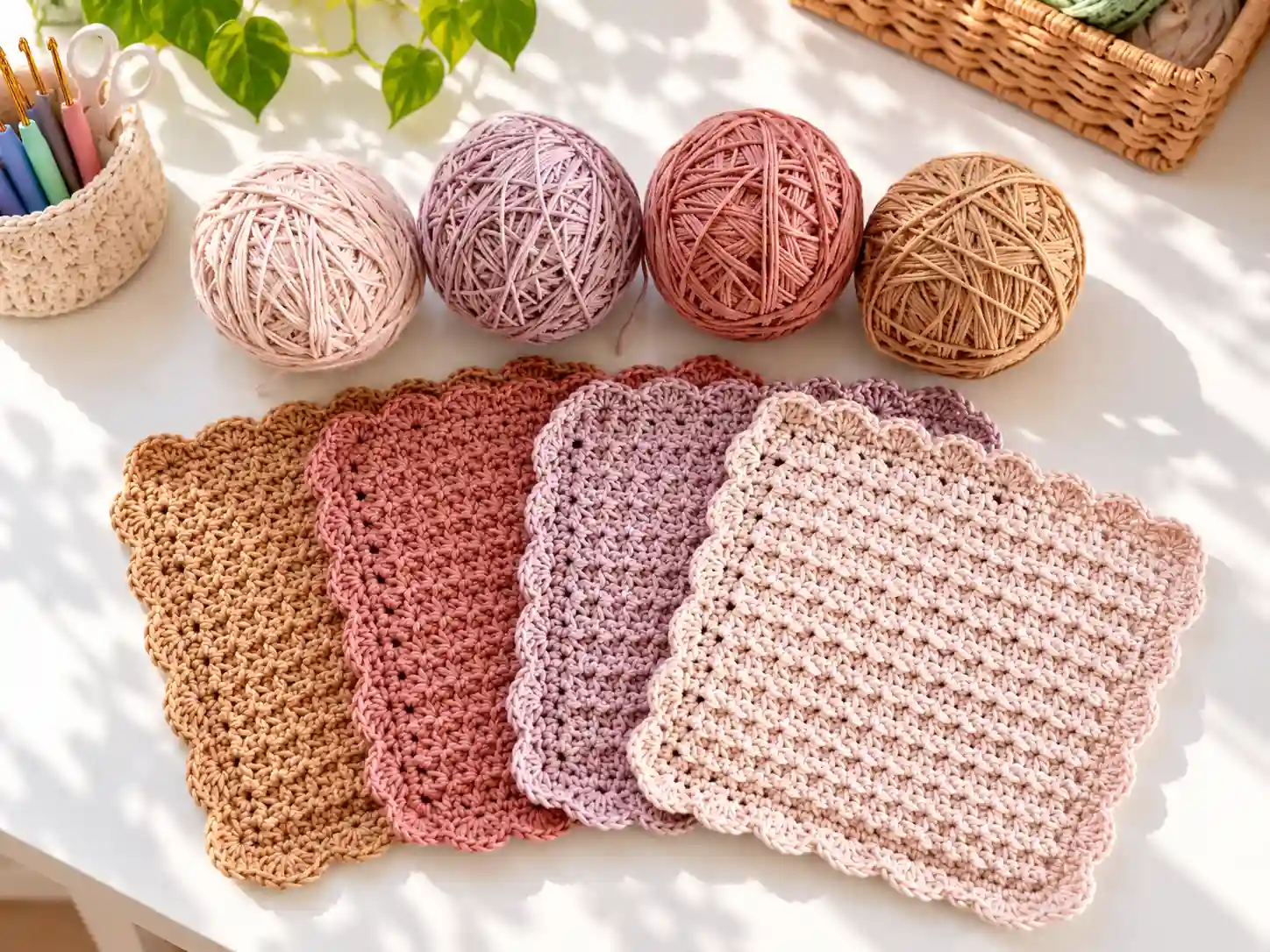
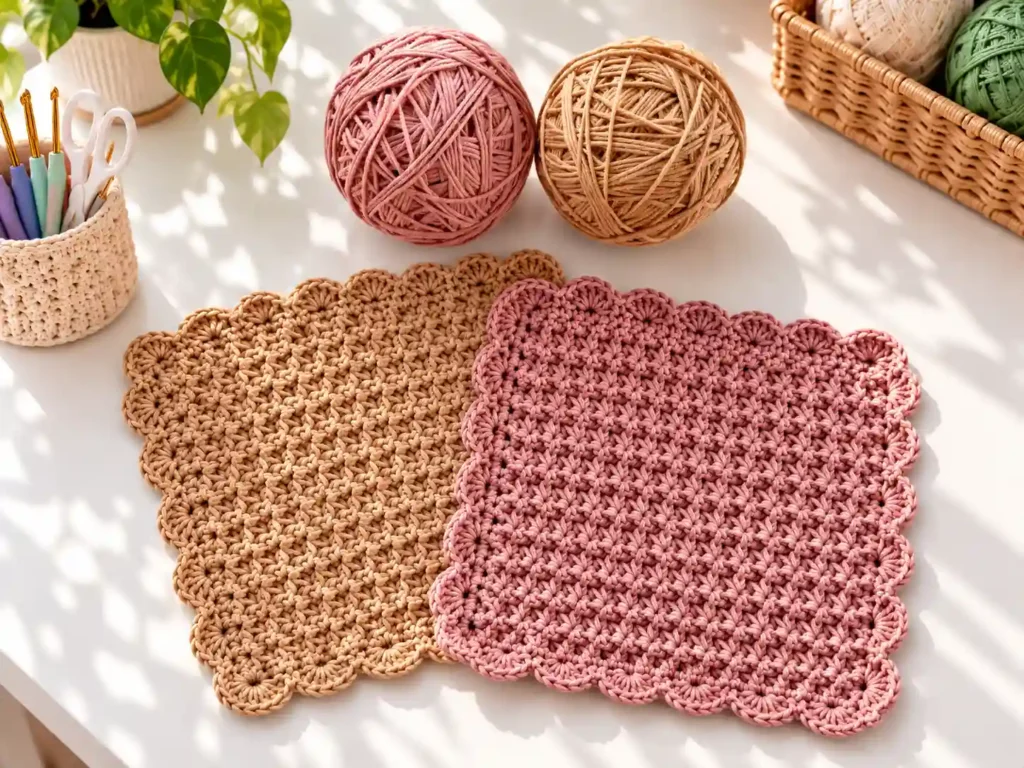
The Wildflower Crochet Dishcloth – Free Pattern is a cheerful way to bring handmade color into the kitchen. Its floral texture gives a simple square dishcloth a decorative finish, while cotton yarn makes it practical for everyday use.
This project suits crocheters who enjoy useful makes with a little visual interest. It can be worked as a one-skein-style beginner project, adapted with leftover cotton yarn, or made in several color combinations for a coordinated set. The finished cloth works well beside the sink, as a small hot pad, or bundled into a thoughtful handmade gift.
Why You’ll Love This Dishcloth
- The floral texture adds detail without requiring complicated shaping.
- Cotton yarn gives the fabric a sturdy, absorbent feel.
- Color changes let you create soft, bright, rustic, or seasonal versions.
- The square format is practical for kitchens and easy to stack or gift.
- It fits naturally among Peaches And Cream Yarn Patterns and other cotton crochet projects.
Materials You’ll Need
- Cotton yarn in the colors required for your chosen flower and border design.
- A 5.5 mm crochet hook, if that is the hook size used for your verified sample.
- Tapestry needle.
- Scissors.
Yarn Information
Use a washable cotton yarn with clear stitch definition. Kitchen cotton is especially suitable because it can handle regular washing and gives the dishcloth enough body for scrubbing and wiping.
A medium-weight cotton such as worsted cotton will create a firm cloth. If you substitute a lighter cotton, the fabric may become smaller and more flexible. A heavier yarn will make the dishcloth larger and thicker. Because yarn labels and skein sizes vary, use the amount required by your verified pattern or sample rather than relying on an assumed quantity.
This design can also be adapted as one of many Beginner Crochet Projects One Skein when you use a single multicolored skein or a small amount of contrasting cotton from your stash.
Crochet Abbreviations
The pattern uses US crochet terminology.
- ch: chain
- dc: double crochet
- sc: single crochet
- sl st: slip stitch
- st: stitch
Pattern Notes
- Work the main cloth in rows, turning at the end of each row unless your verified pattern indicates otherwise.
- Keep the first and last stitches easy to identify so the edges remain straight.
- Flower centers and textured sections may require careful placement into chain spaces or designated stitches.
- When changing colors, complete the final pull-through of the previous stitch with the new color.
- Do not count a turning chain as a stitch unless the pattern specifically says to do so.
- Weave in each yarn end securely on the wrong side before washing or using the cloth.
Wildflower Crochet Dishcloth Pattern
The technical details below should be followed from the verified pattern information available for your chosen sample. The reference information confirms the project as a square dishcloth made with cotton yarn and a crochet hook, but it does not provide a complete row-by-row pattern in the supplied details. For accuracy, do not substitute guessed row counts, stitch counts, yarn quantities, gauge, or finished measurements.
Main Dishcloth
Begin with the verified foundation chain and work the main floral texture according to the stitch sequence in your pattern source. Maintain the same repeat across each row and check the edge stitches before turning.
Continue until the fabric reaches the intended square shape. Compare the width and height as you work rather than relying only on the number of rows, since cotton yarn and individual tension can change the finished dimensions.
Border
After completing the main cloth, work the verified border around all four sides. Pay particular attention to the corners. A consistent corner treatment helps the dishcloth lie flat and gives the floral center a neat frame.
Join the final border round with a slip stitch where directed. Fasten off and leave a tail long enough to weave in securely.

Assembly and Finishing
- Lay the dishcloth flat and check that the corners are aligned and the border is not twisting.
- Use a tapestry needle to weave each end back and forth through several stitches on the wrong side.
- Trim the yarn tails only after they are secure.
- If the edges look uneven, dampen the cloth lightly and shape it into a square.
- Allow it to dry completely before folding or using it.
No separate pieces are needed unless you decide to add an optional appliqué or extra embellishment. The floral effect comes from the crochet texture and color arrangement within the cloth itself.
Crochet Tips
- Keep your tension relaxed when working textured stitches. Tight loops can flatten the flower details and make the next row difficult.
- Place a stitch marker at the first stitch of a row if you tend to lose the edge.
- Count the stitches at the end of every row, especially after a color change.
- Use contrasting colors with enough value difference for the flower motif to remain visible.
- For a firmer cloth, choose cotton rather than acrylic and avoid sizing up excessively with the hook.
- If you enjoy 5.5mm Crochet Patterns, keep the same hook size for your sample unless your tension makes the fabric too loose or too stiff.
Color and Size Variations
Try a cream background with yellow centers and green accents for a garden-inspired version. Pink, coral, lavender, and blue create a brighter wildflower palette, while rust, mustard, and sage work beautifully for autumn kitchens.
You can also create a coordinated set by keeping the same stitch pattern and changing only the flower colors. To make a larger cloth, use the verified stitch repeat and add complete repeats rather than extending the fabric randomly. A smaller version can be made by removing complete repeats, provided the border still fits evenly.
These ideas work well with Free Crochet Patterns For Dish Scrubbies and other Crochet Patterns For Dishcloths, particularly when you want several practical pieces with slightly different textures.
Common Problems and Solutions
The dishcloth is curling
Curling usually comes from tight tension, uneven edge stitches, or a border that does not contain enough ease. Check the stitch count, relax your hands, and lightly block the finished cloth. If the border is being added separately, make sure the corner stitches are worked as written.
The flower texture is difficult to see
The yarn colors may be too similar, or the textured stitches may be pulled too tightly. Use a stronger contrast between the background and flower colors and gently loosen the loops while working the raised sections.
The edges are uneven
Look closely at the first and last stitch of each row. Missing an edge stitch can gradually narrow the cloth, while adding an extra stitch can make the sides flare. Mark the first stitch and count regularly.
The finished cloth is too small
Individual tension, yarn weight, and hook size all affect the result. For the next sample, use the recommended yarn and hook, or work additional complete repeats if the stitch pattern allows it.
How to Use the Finished Dishcloth
Use the Wildflower Crochet Dishcloth beside the kitchen sink for wiping counters, drying dishes, or handling small warm items. It also makes a useful hostess gift when paired with a wooden spoon, a bar of handmade soap, or a set of coordinating cloths.
For decorative use, fold one over a bread basket, place it beneath a small plant pot, or stack several in a basket. The raised floral surface gives an ordinary kitchen accessory a more handmade appearance without making it difficult to use.
Care Instructions
Wash the finished cotton dishcloth according to the care instructions on the yarn label. Cotton can generally be machine washed, but use a gentle cycle if the cloth includes delicate color changes or decorative details. Reshape it while damp and allow it to dry flat if the edges need to be encouraged back into a square.
Wash new handmade cloths before their first heavy use. Store them completely dry and avoid leaving them scrunched in a damp sink.
Frequently Asked Questions
Can a beginner make this dishcloth?
Yes, provided the crocheter is comfortable with the basic stitches used in the verified pattern. The square construction is approachable, and the project is small enough to make stitch practice manageable.
What yarn works best?
Washable cotton is the best practical choice. It provides a firm, absorbent fabric and is available in many colors. Peaches and Cream style cottons and similar kitchen yarns are suitable when their weight matches the pattern.
Can I use a different hook size?
Yes, but the finished size and fabric density will change. A larger hook creates a looser cloth, while a smaller hook creates a denser one. Make a small test section if you are unsure.
Can I use acrylic yarn?
You can use acrylic for a decorative cloth, but cotton is more appropriate for wiping and washing because it has a more suitable kitchen texture and care profile.
How can I make the dishcloth larger?
Add complete stitch repeats to the main section if the verified pattern allows it. Keep the border instructions consistent and compare the width and height as you work.
How do I keep the cloth square?
Count every row, maintain consistent edge stitches, and avoid pulling the turning chain tightly. Blocking the finished cotton piece can also improve its shape.
Is this a good gift project?
Yes. It is practical, portable, and easy to coordinate in sets. Make several in different wildflower colors for a useful handmade gift.
Final Thoughts
The Wildflower Crochet Dishcloth – Free Pattern combines everyday usefulness with a bright floral look. Choose a cotton palette that suits your kitchen, keep your edges steady, and let the texture become the focus of the finished piece. It is a satisfying addition to your collection of best crochet projects and a simple way to turn basic materials into something useful.