
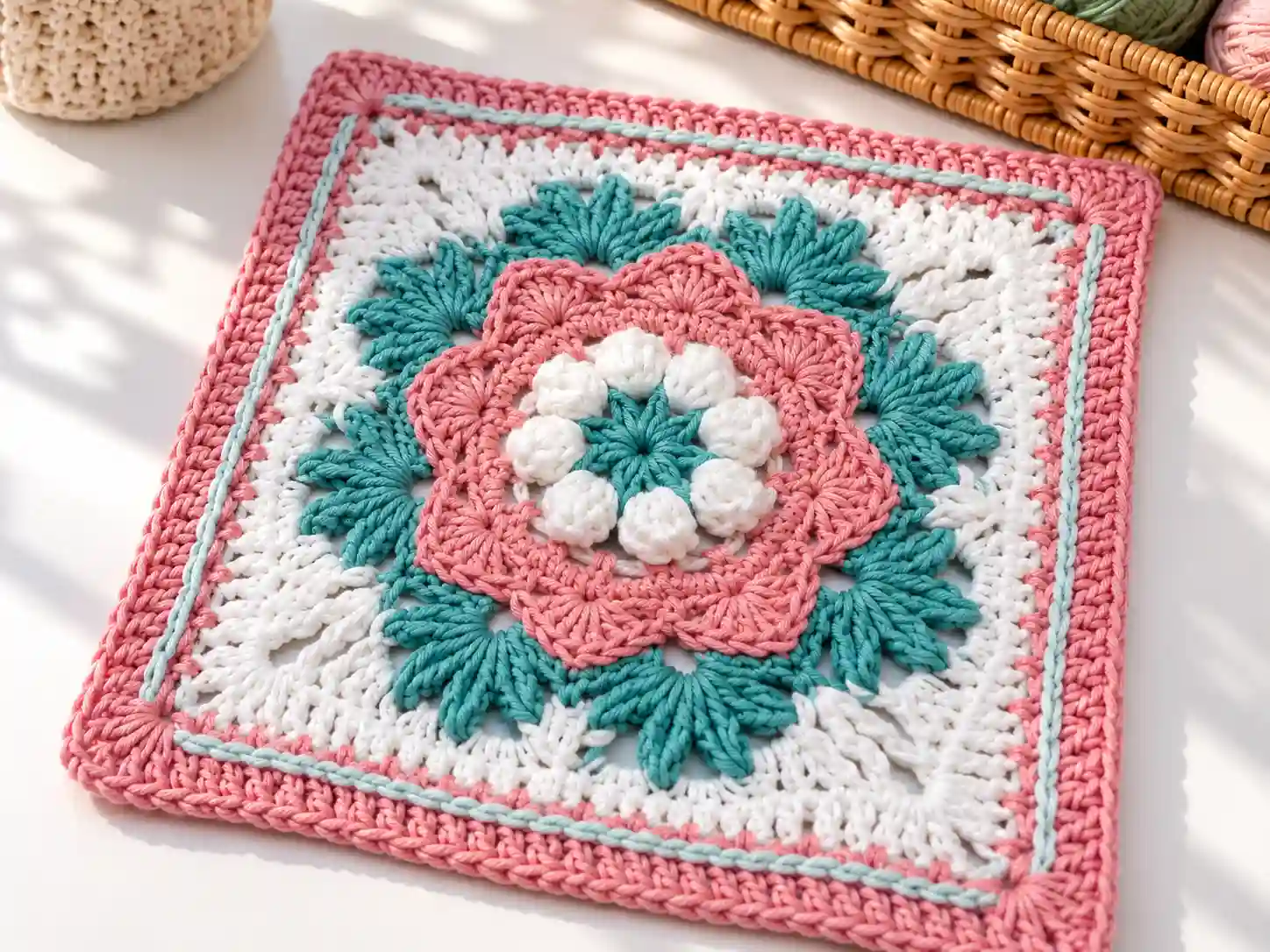
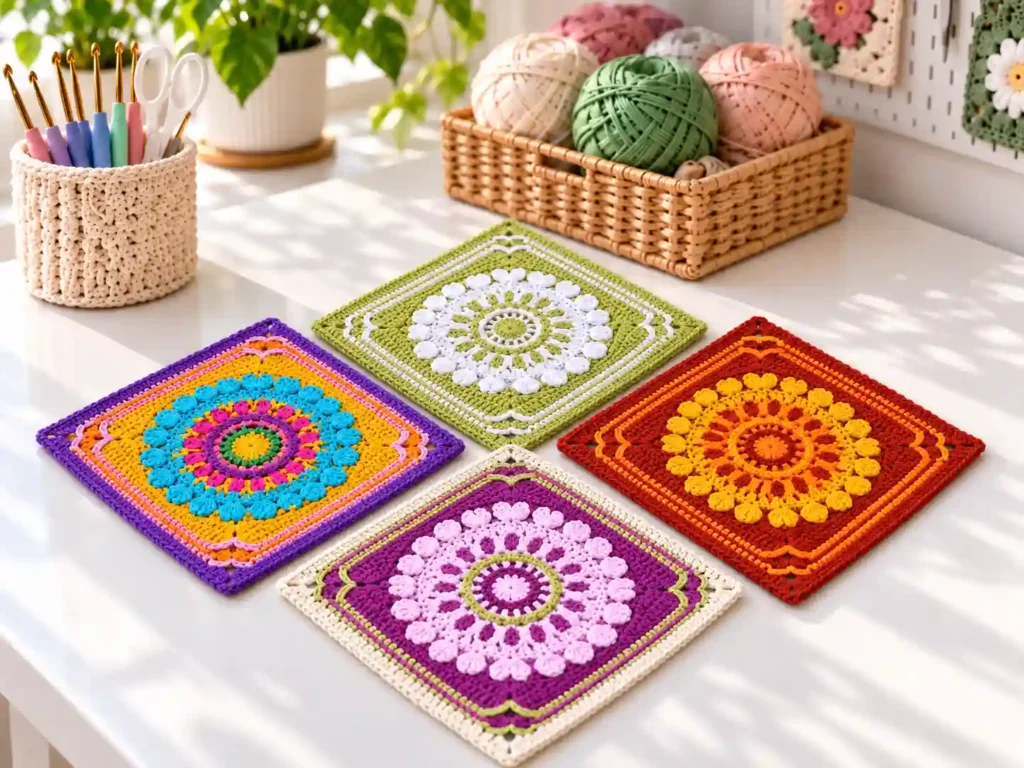
Sweet Crochet Mandala Squares bring together the satisfying symmetry of a mandala with the practical, joinable shape of a granny square. The result is a motif that looks detailed and decorative but still works beautifully as the building block for blankets, cushions, bags, and other everyday crochet projects.
A mandala square usually begins with a circular center, then gradually develops corners and straight edges as the rounds continue. That shift from round to square is what makes these motifs so versatile. You can make one square as a coaster or wall accent, or repeat the same design in different colorways to create a larger piece with plenty of visual movement.
Why You’ll Love Sweet Crochet Mandala Squares
- They are ideal for using small amounts of leftover yarn.
- Color changes create a completely different look without changing the construction.
- One finished square can become a coaster, appliqué, or small decorative piece.
- Multiple squares join easily into blankets, pillow covers, tote bags, and table runners.
- The circular-to-square shape gives simple crochet stitches a more detailed appearance.
- They are portable projects, especially when worked one square at a time.
These squares also suit many crochet styles. Choose soft pastels for a gentle nursery blanket, bold tropical shades for a summer bag, or warm autumn tones for a cozy throw. Because the mandala center draws the eye first, even a simple border can look polished.
Finished Size
No finished measurements, gauge, yarn quantity, or hook size were provided for this project, so none are stated here. The final size of a mandala square depends on the specific pattern, yarn weight, hook size, and individual tension. A heavier yarn and larger hook will produce a bigger block, while fine yarn and a smaller hook will create a more delicate square.
Materials You’ll Need
- Yarn in your chosen colors
- Crochet hook appropriate for your yarn
- Tapestry needle for weaving in ends
- Scissors
- Stitch markers, if you like to mark corners or the beginning of rounds
- Blocking mats and pins, optional but helpful for shaping
Yarn Information
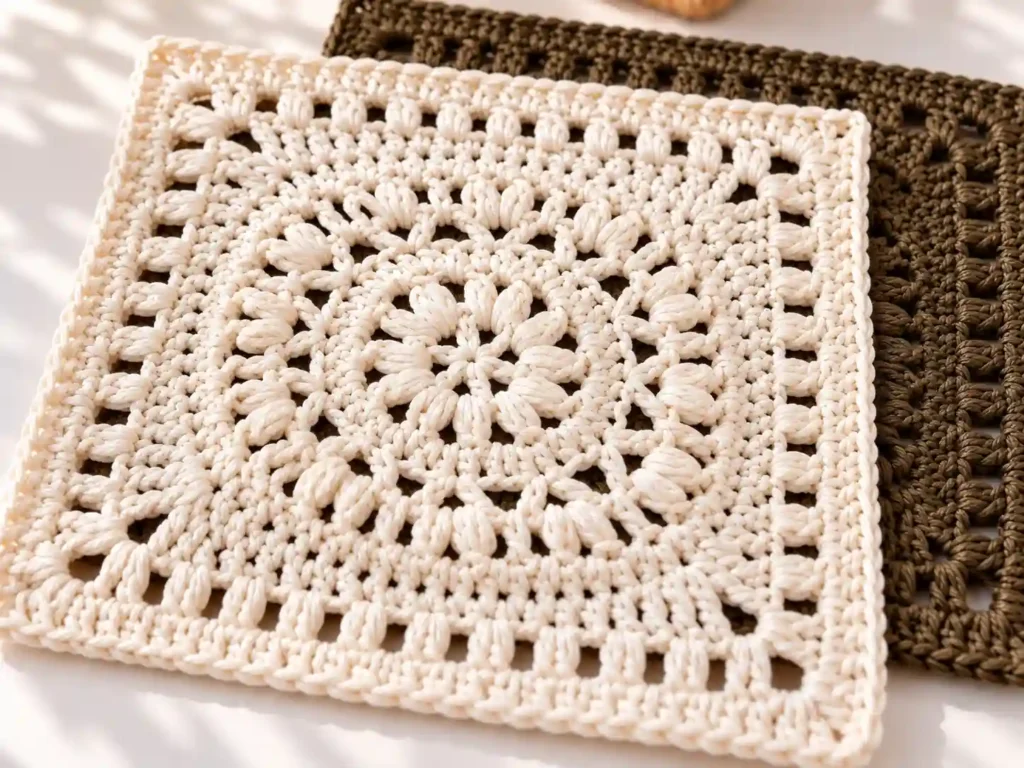
Mandala squares work well with smooth, plied yarn because stitch definition matters. Cotton is a strong choice for coasters, bags, and home décor because it gives crisp edges and holds its shape nicely. Acrylic is a practical option for blankets and everyday projects, while wool or wool blends add warmth and a softer, more elastic feel.
For the clearest mandala effect, select one main color for the center, one or two contrasting shades for the middle rounds, and a quieter color for the outer border. High-contrast combinations show off textured stitches, while tonal shades create a softer, more blended design. If you change yarn weight, expect the finished square size to change too; make a test square before committing to a large project.
Crochet Hook
Use the hook size recommended for the yarn you choose, or the hook size specified by the individual pattern you follow. A slightly smaller hook can help textured mandala stitches look neat and prevent loose gaps, especially around color changes. If your fabric feels stiff, move up a hook size; if it feels floppy, try going down one size.
Crochet Abbreviations
Mandala square patterns commonly use US crochet terminology, but always check the pattern notes before beginning, since UK terminology differs. Abbreviations you may encounter include:
- ch = chain
- sl st = slip stitch
- sc = single crochet
- hdc = half double crochet
- dc = double crochet
- tr = treble crochet
- st(s) = stitch(es)
- sp = space
- rep = repeat
- rnd = round
Pattern Notes
Most mandala squares are worked in joined rounds from the center outward. The first rounds form the circular motif, and later rounds introduce corner stitches that turn the circle into a square. Many designers use a standing stitch or a slip-stitch join at the start of a new color, which helps keep the transition tidy.
Before starting, read the full pattern and note where color changes occur. Keep the right side facing you as you work each round, unless the instructions say otherwise. Count stitches at the end of every round, particularly after corner sections, because an early missed stitch can make the square uneven several rounds later.
How a Mandala Square Is Constructed
A typical mandala square follows three stages. First, the center is worked into a magic ring or a small chain ring. Next, decorative rounds build outward using combinations of stitches, spaces, clusters, or petals. Finally, corner and side rounds transform the circle into a usable square with four defined corners.
No complete verified written pattern, stitch counts, round-by-round instructions, hook size, yarn amount, or finished measurements were supplied for this specific project. To crochet a Sweet Crochet Mandala Square accurately, follow the full written pattern or video tutorial for the exact motif you choose. Avoid substituting stitch counts between different mandala designs, since each one depends on its own round structure.
The most satisfying part of making these squares is watching the design open up round by round. A plain-looking center can quickly become a flower-like motif, a geometric star, or a layered mandala once contrasting colors are added. Working slowly through the first few rounds makes it easier to see how each section supports the next.
Assembly
Once your squares are complete, decide how you want to join them before making a large number. Flat joins create a smooth surface, while raised joins add texture along the seams. Lay the squares out first and rearrange the colors until the overall design feels balanced.
- Block each square gently so the edges are even and the corners point outward.
- Arrange the squares in the desired layout, alternating light and dark colorways if needed.
- Join squares with your preferred method, such as whip stitch, single crochet join, slip-stitch join, or join-as-you-go.
- Match corner points carefully so the finished project stays square.
- Weave in all ends before adding a border or lining.
Finishing Touches
Blocking makes a noticeable difference with mandala squares. Lightly wet or steam the finished square according to your yarn’s care guidance, then pin it to the correct shape and allow it to dry completely. This helps open lace sections, relax curled edges, and make joining much easier.
A simple final border can unify squares made in slightly different color combinations. Single crochet, crab stitch, picot, or a row of double crochet all work well, depending on the look you want. Weave in ends securely, especially where colors change frequently.
Crochet Tips
- Keep your tension consistent, since tight stitches can pull the center inward while loose stitches can make the square wavy.
- Use a stitch marker to identify the first stitch of each round if your pattern begins with a standing stitch.
- Change colors at the same point in every repeat to maintain symmetry.
- Wind small yarn amounts onto bobbins if a design uses many short color sections.
- Count stitches before joining each round rather than waiting until the square is finished.
- Block squares before joining them so seams line up cleanly.
Variations
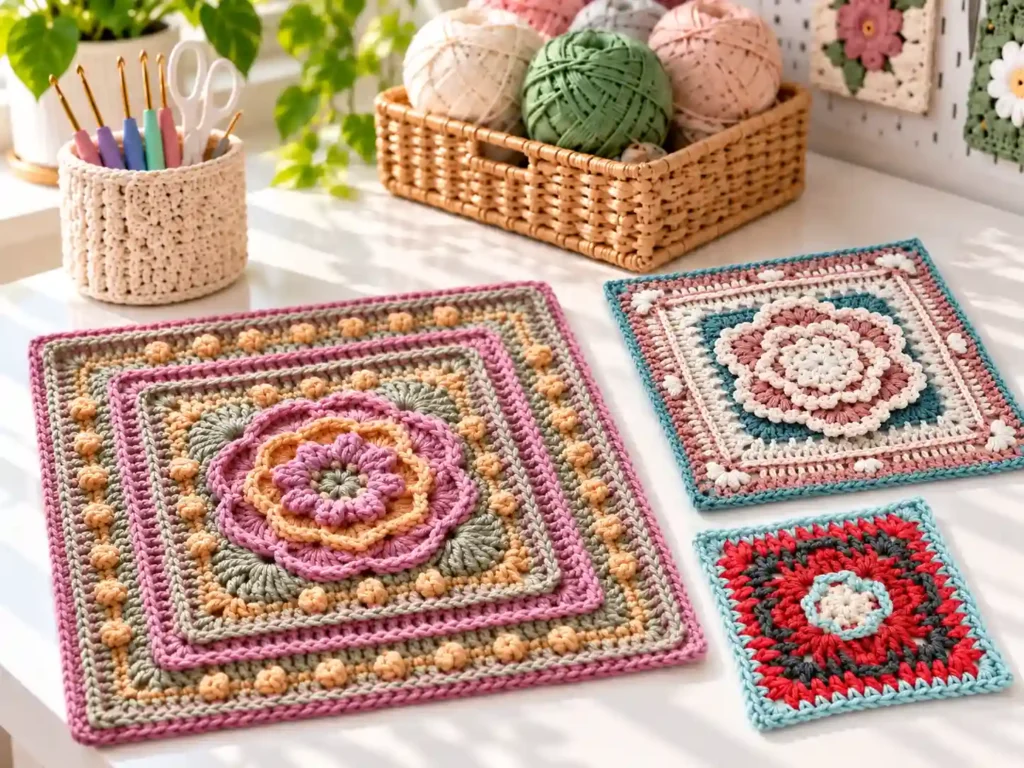
Sweet Crochet Mandala Squares adapt easily to different moods. Use a rainbow sequence for a playful blanket, muted neutrals for modern home décor, or seasonal shades for holiday projects. A frog-themed color palette of greens, whites, and dark accents can give a square a cheerful nature-inspired feel, while soft blues and whites create a cloudy-day look.
You can also change the scale by adjusting yarn weight and hook size, provided you follow the same pattern proportions. For a more textured design, choose a motif that includes bobbles, popcorns, puff stitches, or raised petals. For a lighter, airier square, look for patterns with open spaces and taller stitches.
Common Problems and Troubleshooting
The square is curling
Curling often happens when the center rounds are too tight or when there are not enough stitches to keep the fabric flat. Check that you followed the stitch count exactly, then block the finished square. If it still cups, your tension may be tighter than the pattern expects, so try a larger hook.
The square is ruffling
Ruffling usually means there are too many stitches for the available space. Recheck the repeat sections and make sure you did not add extra stitches in the corners. A smaller hook or firmer tension can also help the square lie flat.
The corners are not sharp
Corners need enough stitches or chain spaces to turn the circular shape into a square. If the corners look rounded, revisit the corner instructions and confirm that each corner receives the required number of stitches. Blocking will improve the shape, but it cannot fully correct a missing corner increase.
The stitch count is wrong
Stop at the end of the round and count each section separately: sides, corners, and repeats. Compare the numbers with the pattern before moving on. If the count is off, carefully remove stitches back to the last round with a correct count rather than trying to compensate later.
How to Use the Finished Crochet Project
- Join several squares into a blanket, throw, or bedspread.
- Use four or more squares for a textured cushion cover.
- Sew one square onto a tote bag or pouch.
- Turn a small square into a coaster or table accent.
- Add a hanging loop to make a wall decoration.
- Use a single motif as an appliqué on a sweater, hat, or denim jacket.
- Make a set in coordinated colors for a handmade gift.
Care Instructions
Care depends on the yarn fiber. Cotton and acrylic squares can usually be hand washed or machine washed gently, but always follow the yarn label. Reshape the square while damp and dry it flat to preserve the mandala shape. Avoid wringing delicate wool or hand-dyed yarn, and store finished projects folded loosely rather than hanging them.
Frequently Asked Questions
Can a beginner make a crochet mandala square?
Yes, many mandala squares are beginner friendly, especially those using basic stitches and simple color changes. More detailed designs with clusters, popcorns, or complex repeats are better for crocheters who have some experience following round-based patterns.
What yarn works best for mandala squares?
Smooth cotton or acrylic yarn is a dependable choice because it shows stitch definition clearly. Choose a yarn weight that suits the finished item: cotton for coasters and bags, acrylic or wool blends for blankets and cushions.
Can I use a different hook size?
Yes, but the square will change in size and drape. A larger hook creates a looser, larger square, while a smaller hook produces a denser fabric. Make a test square before starting a large project.
Can I make the square larger or smaller?
You can change the size by using a different yarn weight or hook size. Some mandala patterns also include optional additional rounds, but only add rounds if the pattern provides instructions for them.
How do I prevent the square from curling?
Keep your tension relaxed, verify the stitch count after each round, and block the finished square. If the center remains tight, try a larger hook for the early rounds or choose a pattern with more open spacing.
How many colors should I use?
Two or three colors create a clean, balanced look, while four or more can make the mandala more vibrant. Use a neutral outer border if your center colors are especially bold.
How should I wash a finished mandala square project?
Follow the care instructions on the yarn label. In general, wash gently, avoid high heat, reshape while damp, and dry flat to keep the squares even.
Conclusion
Sweet Crochet Mandala Squares are a wonderful way to turn simple stitches into something decorative, useful, and full of personality. Start with one square, experiment with a color palette you love, and see how easily the motif can grow into a larger project. With careful counting, even tension, and a little blocking, each square becomes a small piece of crochet art ready to join into something bigger.